The Secret to the Perfect Summer Berry Sponge Cake: A Guide to Light & Airy Texture
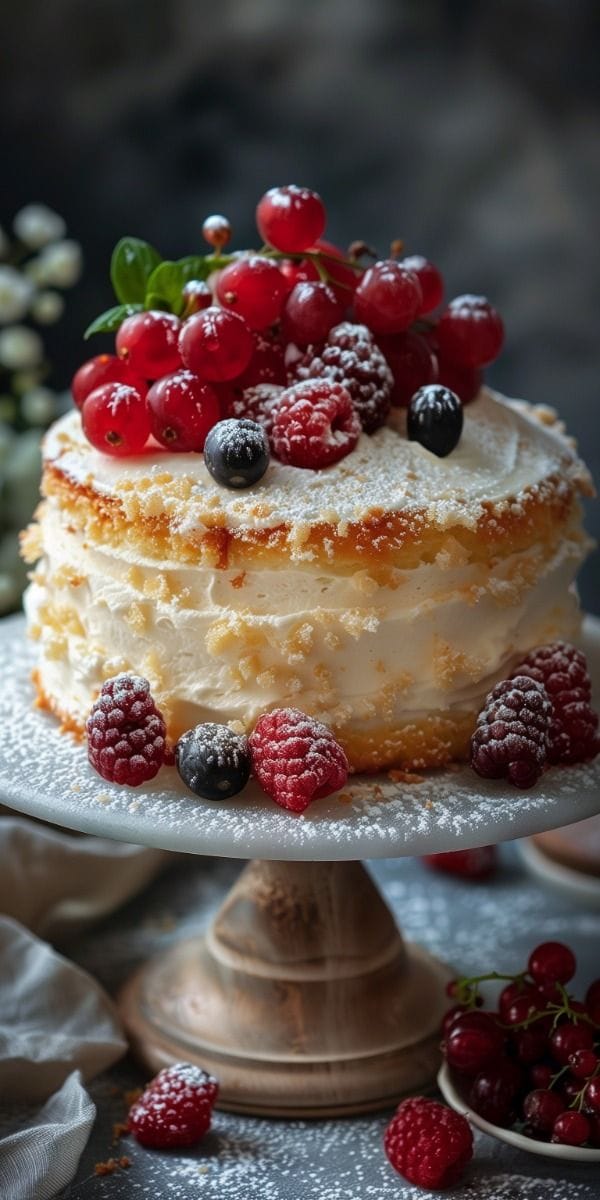
There is something timeless about a classic sponge cake. When topped with fresh currants, raspberries, and blueberries, it transforms from a simple dessert into a centerpiece. But as any baker knows, the beauty of a sponge cake lies beneath the surface—in the delicate balance of aeration and structural integrity.
The Anatomy of a Perfect Sponge
A great sponge cake isn't just about the flavor; it’s about the mechanical properties of the crumb. To achieve that "cloud-like" texture seen in the image, you need to master three specific elements:
- Emulsification: Ensuring your eggs and sugar are whipped to the "ribbon stage" to trap maximum air.
- Gentle Folding: Protecting those air bubbles when introducing dry ingredients.
- Hydration: Balancing the moisture of the cream filling so it softens the cake without making it soggy.
Ingredients You’ll Need
- For the Base: Fine caster sugar, room-temperature eggs, and sifted cake flour.
- For the Filling: High-fat heavy cream (at least 35%) and a hint of Madagascar vanilla bean.
- The Topping: A seasonal mix of red currants, raspberries, and tart blueberries to cut through the sweetness.
Step-by-Step: From Oven to Table
1. The Bake
Preheat your oven to 180°C. The key to an even rise is avoiding the temptation to peek. Opening the oven door too early causes a pressure drop that can collapse your delicate structure before it has set.
2. The Assembly
Once cooled, slice your sponge into even layers. Apply a generous layer of chantilly cream. Pro tip: apply the cream slightly thicker toward the edges to create that beautiful "overflow" look.
3. The Finishing Touch
Dust the top with a fine layer of icing sugar. This doesn't just add sweetness; it provides a "grip" for the fresh berries, preventing them from sliding off the glossy cream surface.
Why Texture Matters
In the world of design and engineering, we often talk about "form following function." In baking, the form is the aesthetic beauty of the berries, but the function is the mouthfeel. A cake that looks this good must be light enough to enjoy after a full meal, yet sturdy enough to hold its shape on a marble stand.
Baker’s Note: If you’re looking for a more interactive way to learn, I’m currently working on a Three.js simulation that visualizes the heat distribution inside a convection oven—stay tuned for that technical deep dive!